Read the whole care label
Some wool garments allow a machine wool cycle; others specify hand washing or professional cleaning. Fibre content alone does not settle the question. Finishes, trims and the way a garment is made can change its care requirements. If the label is missing, check whether the maker publishes instructions for that exact garment before experimenting.
Between washes, let a lightly worn jumper air in a dry, ventilated place away from direct heat. Airing can help with ordinary wear, but it does not remove a food stain or replace washing when the garment is dirty.
Keep the wash gentle
If machine washing is permitted, use the specified wool or delicate programme and a detergent suitable for wool. Follow both the care label and detergent dosage instructions. A regular cotton programme is not an equivalent simply because its temperature setting looks low.
For a jumper labelled for hand washing, use the permitted water temperature and gentle handling. Avoid rubbing sections against each other or wringing the garment. Support the wet fabric as you lift it; the weight of retained water can pull it out of shape. Do not improvise with bleach or an unfamiliar stain mixture.
Dry with its shape supported
After washing, gently remove excess water without twisting. A clean towel can help absorb moisture if used without stretching the knit. Reshape the jumper carefully and dry it flat as directed, away from radiators and strong sunlight. Check that the surface beneath it is suitable for damp textiles.
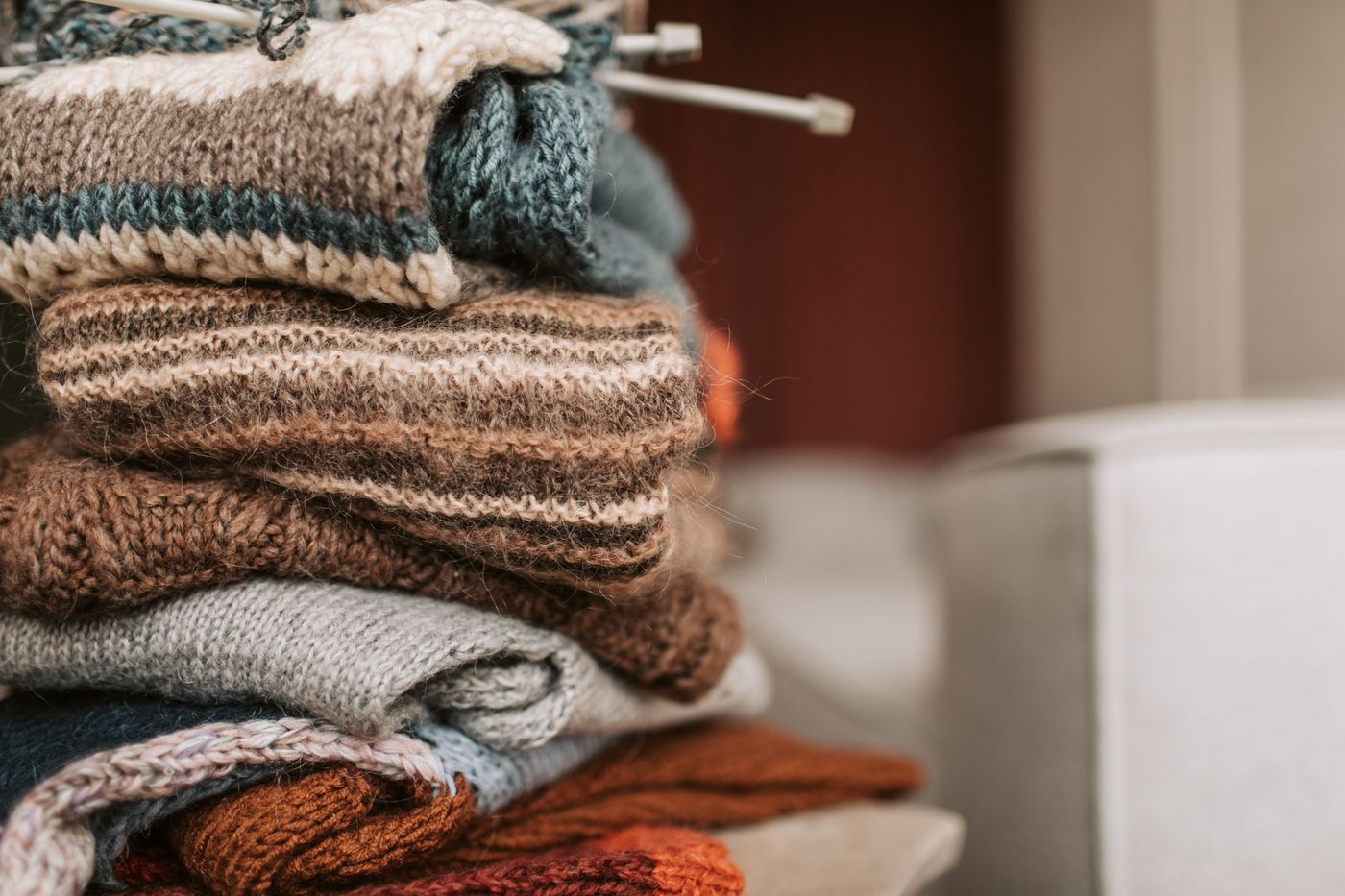
Wait until the jumper is fully dry before folding it away. If it has already shrunk or felted, avoid promises of a guaranteed home rescue: further heat or handling may make matters worse. A cleaner experienced with wool can assess a garment you are reluctant to risk.