Lift and blot rather than spread
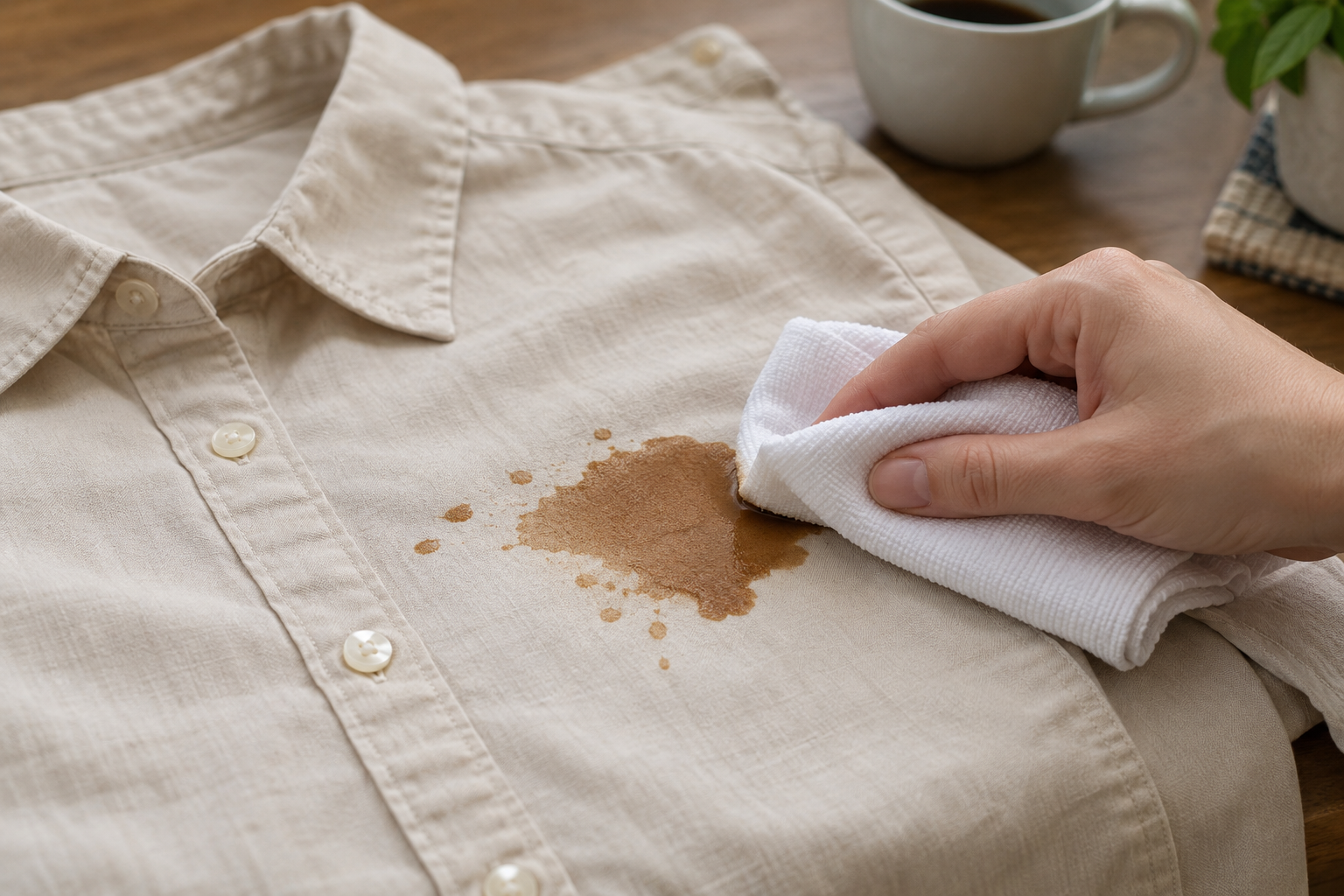
Remove loose food carefully without grinding it into the cloth. For liquid, use a clean absorbent cloth to blot gently. Work with a fresh area of the cloth as it picks up the spill, and avoid vigorous rubbing that spreads residue or roughens the surface.
If you are away from home, keeping the area from being rubbed repeatedly may be the most useful immediate step. Do not let the nearest soap, hand sanitiser or cleaning spray become an automatic stain remover. Their ingredients and the garment's finish may be a poor match.
Check the fabric and the stain
Read the care label before introducing water or a product. A washable cotton shirt and a silk-lined jacket do not invite the same response. Note what was spilled and when; that information is useful if professional cleaning becomes the sensible option.
Choose a treatment intended for that stain and compatible with the garment. Read its instructions and test discreetly where appropriate. Avoid mixing cleaning products or escalating from one unfamiliar chemical to another. For a valued or dry-clean-only piece, seek advice rather than turning a small mark into an experiment.
Reassess before heat
After a permitted cleaning process, inspect the area before ironing or tumble drying. Do not use heat to hurry a garment into service while the stain remains unresolved. Some marks need a different approach, and repeated treatment can also affect the cloth.
A successful result may take more thought than the first few minutes allow. Keep a note of anything already applied so a cleaner has the full picture. The aim is to preserve the garment while dealing with the spill, not to prove that every stain has an instant household cure.