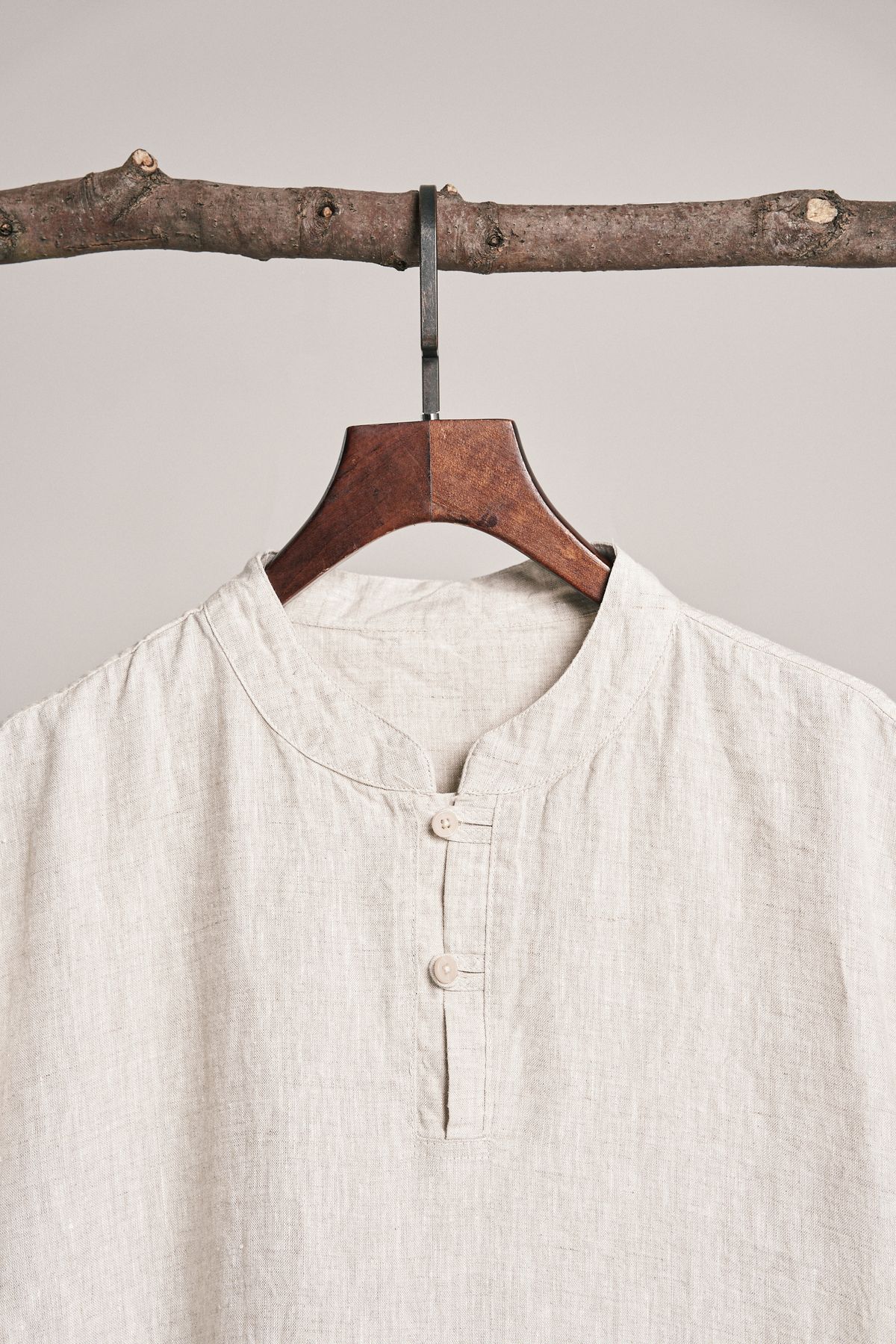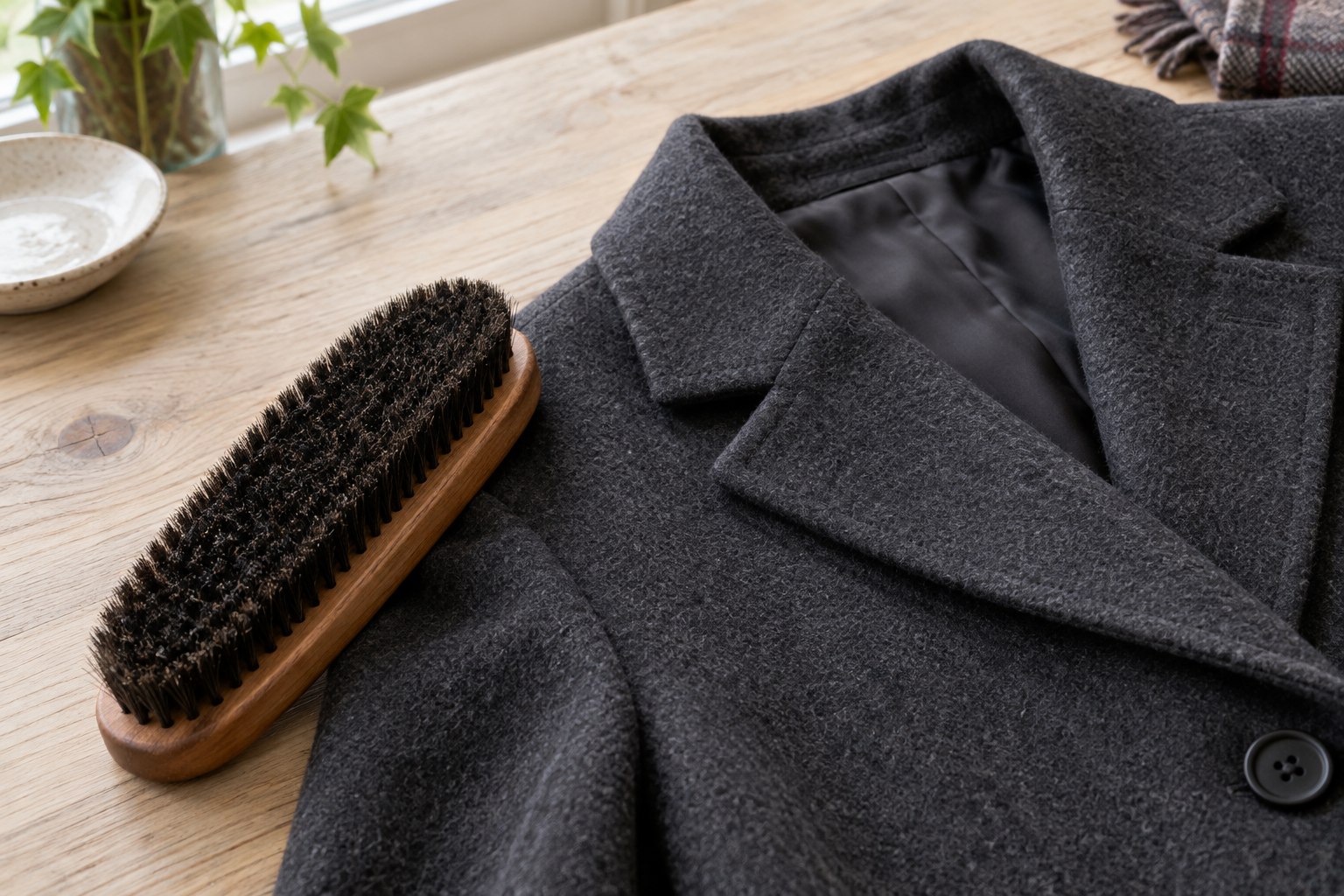
Look at the surface first
Check whether you are dealing with dust, dried loose particles, a stain or damaged cloth. Brushing may help with the first two on suitable materials. A greasy mark or a pulled thread needs a different decision, and vigorous brushing can make either more difficult to address.
Read any care advice supplied with the garment and brush. A firm brush that suits a sturdy coat may be too harsh for an open knit, a fluffy finish or a delicate trim. If the surface is unfamiliar, test very cautiously in a discreet place or ask the maker.
Support the garment
Hang a suitable coat securely or lay the area flat, depending on what gives you control without stretching it. Empty pockets and check for loose buttons or decoration. Work gently rather than scrubbing repeatedly at one patch.
Pause to inspect the result in good light. If fibres begin lifting, a seam catches or the surface changes, stop. The aim is to remove loose material, not abrade the cloth until it looks different. Keep the brush clean so you do not transfer yesterday's dirt to today's sleeve.
Keep cleaning decisions separate
A brushed garment may still need washing or professional cleaning according to its label. Pay particular attention to collars and areas with body oils: a tidier-looking surface does not settle every care question.
Store the brush where its bristles stay clean and uncrushed. It earns its place if you regularly wear garments that benefit from gentle surface care. If most of your wardrobe consists of delicate knits or washable shirts, it may be less useful than you expect. Choose the tool around your clothes, rather than finding reasons to brush every item because the tool is available.