Check more than the first instruction
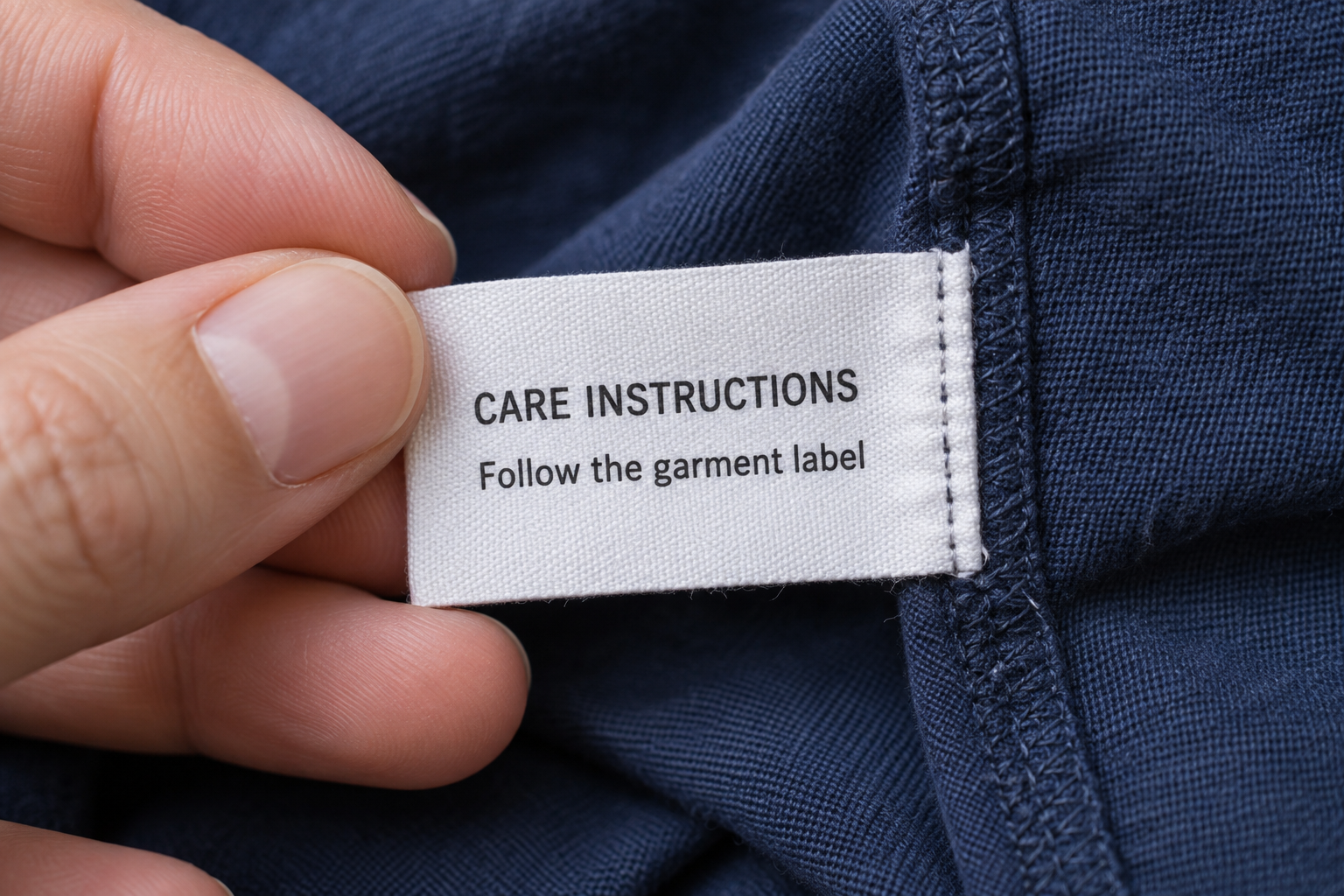
The label may cover washing, bleaching, drying, ironing and professional cleaning. A garment that can be washed may still need a particular drying method. Equally, permission to iron is not permission to use the hottest setting or steam without checking further.
Look for written qualifications as well as symbols. Instructions about washing separately, removing a belt or reshaping while damp can matter just as much as the main treatment. If the printing is small, photograph the label so you can enlarge it while setting up the laundry.
Keep the garment together in your decision
Fibre content helps explain what a garment is made from, but the care instructions concern more than the main cloth. Lining, adhesive construction, decoration and fasteners can impose limits. Do not select a programme solely because the machine has a button bearing the fibre's name.
Treat a stated maximum temperature as a limit, not a challenge to exceed. Check the meaning of unfamiliar care symbols with an established reference such as GINETEX rather than guessing from their appearance. Drying and professional-care symbols are particularly easy to confuse when viewed quickly.
Deal with missing information calmly
For an unreadable label, search the maker's instructions for the exact item if possible. A similar-looking piece may have a different finish or construction. For valuable, delicate or heavily structured clothing, a cleaner can assess the item before treatment.
It can help to keep a photograph of the care label beside an online order record. You then have the original instructions if the label fades. Avoid cutting out the only readable copy simply because it is inconvenient: if removal is necessary for comfort, save the information somewhere you can find before the next clean.