Examine it in good light
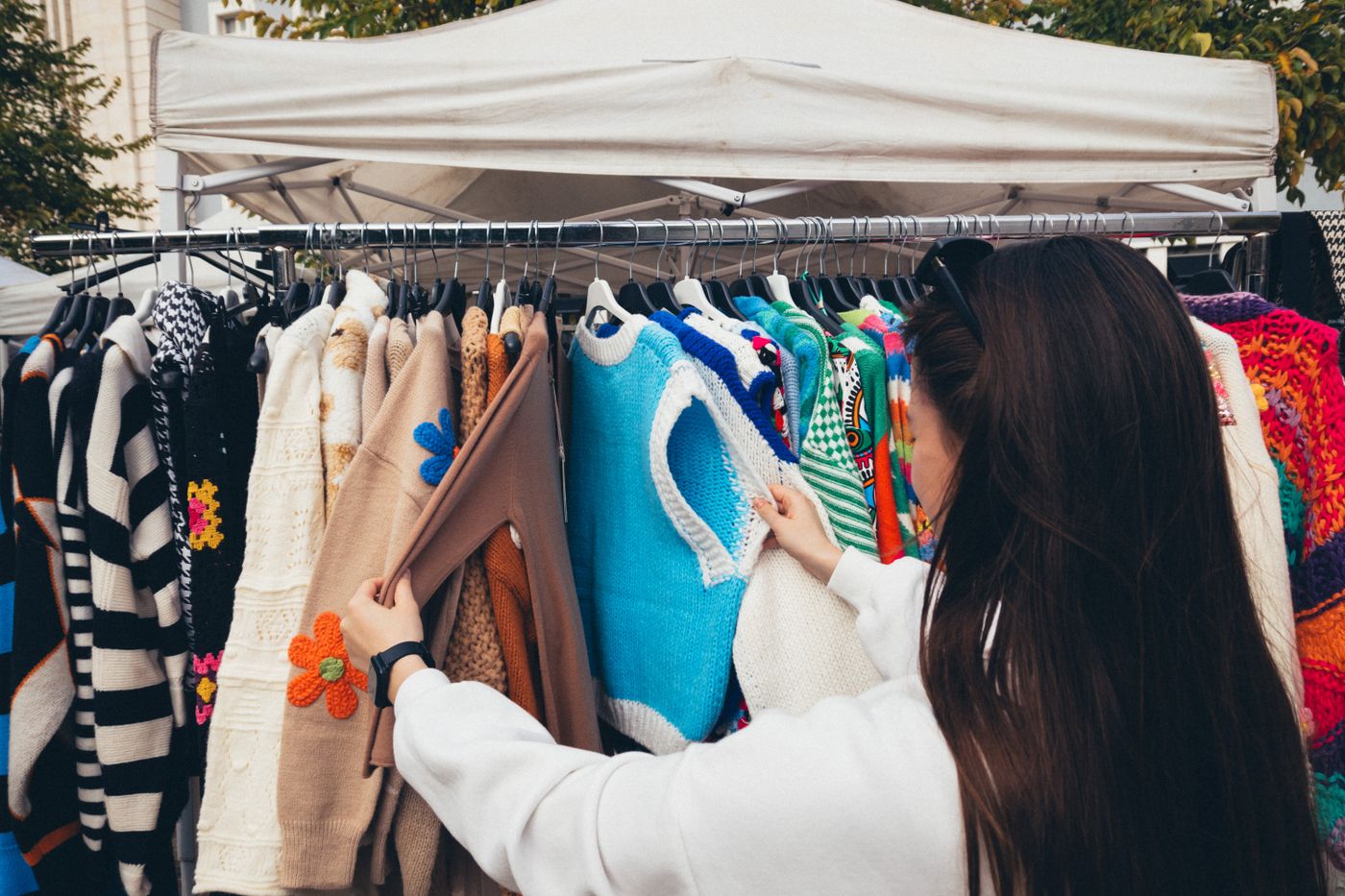
Look across the body, sleeves and ribbing, then turn the garment to inspect the inside. Pay attention to underarms, elbows and cuffs. Thin patches can be easier to see when the fabric is gently supported, but do not stretch a fragile area to test its strength.
Check any holes separately from loose surface pills. A hole may have several causes, and a photograph alone may not tell you enough. If buying online, ask for clear close-ups of uncertain areas rather than assuming that a small mark is harmless.
Assess shape and surface together
Compare the two sleeves, the neckline and the hem. Consider whether the shape appears intentional or whether sections have stretched unevenly. Look for signs that the knit has become unusually dense or changed dimensions, without claiming you can diagnose its entire washing history from appearance.
Woolmark explains pilling as fibres gathering into surface balls. Bobbles alone are not a complete quality verdict, but removing them requires an appropriate gentle method. Do not buy a visibly fragile jumper on the assumption that aggressive shaving will restore it.
Include care and repair in the price
Find the fibre and care labels if present. Decide whether you can maintain the garment in the required way and ask about any known repairs or damage. A missing label adds uncertainty, especially for a valuable or delicate piece.
Seek repair advice before committing to something that depends on a difficult mend. Do not assume a wash will resolve possible pest concerns or all lingering odours. A successful second-hand purchase is one whose condition and needs you understand, not simply one with a low price and an appealing fibre description.