Separate temperature from the calendar
A date on the calendar does not tell you when a light jacket stops being useful. Begin with extremes: the heaviest cold-weather layers or the holiday clothes that will not be needed for months. Leave a few adaptable layers within reach for chilly evenings and changeable mornings.
Try on returning clothes before giving them the best space. Check closures, fit and anything that needed attention at the end of last season. This makes the exchange a chance to prepare clothes for use, rather than simply moving a closed box into a different cupboard.
Store clothes ready for their next wear
Follow the care label when cleaning and allow everything to dry completely before packing. Check pockets and remove food wrappers, tissues and other forgotten contents. Fold without forcing a large pile into a small container; use a suitable garment cover for pieces that need to hang.
Choose a clean, dry storage location and keep containers away from damp walls or leaks. The name of a storage product cannot compensate for a damp cupboard. If a piece is delicate, valuable or unfamiliar, check its specific storage needs rather than treating it like everyday cotton clothing.
Label what is actually inside
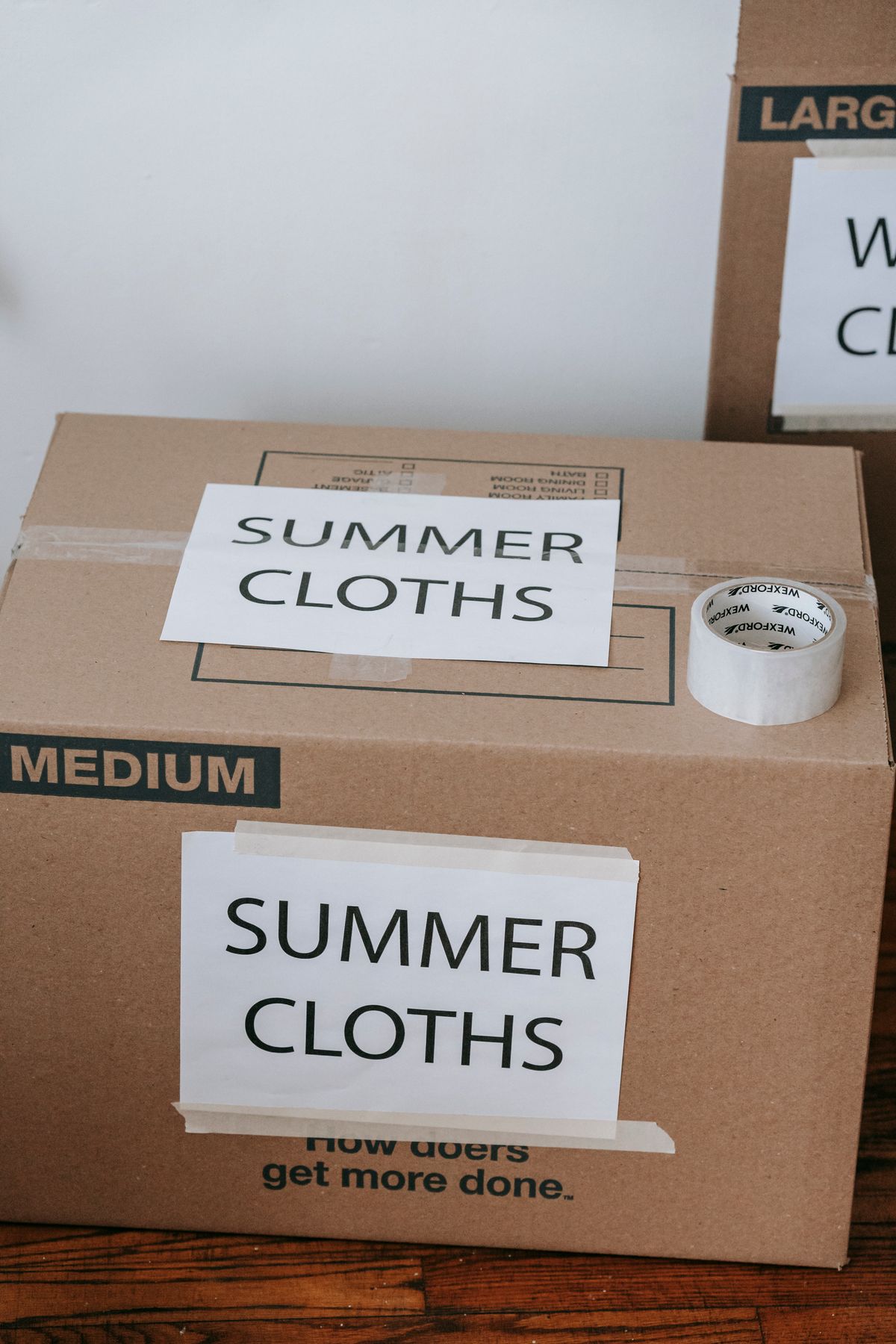
Write a short contents list such as 'heavy knits and two scarves', rather than simply 'winter'. Include the month when you packed it if that will help you find an item later. Keep travel or occasion clothes separate if they may be needed before the next seasonal change.
Leave some empty room in the active wardrobe. An exchange that fills every available centimetre will quickly spill onto chairs. You are aiming for easier mornings through the next stretch of weather, with the stored pieces still straightforward to retrieve.