Replace the pile with decisions
Take out one piece at a time and identify the actual fault. 'Needs fixing' is vague; 'replace the missing cuff button' is a task. Look over the rest of the garment before committing time to it. A simple missing button is different from several areas of worn fabric and a broken closure.
Separate jobs you can do from those that need a tailor or repair service. Hand sewing a familiar button may be comfortable territory, while adjusting a lined jacket is not. You do not need to learn a difficult technique on a valued item just because it has been waiting a long time.
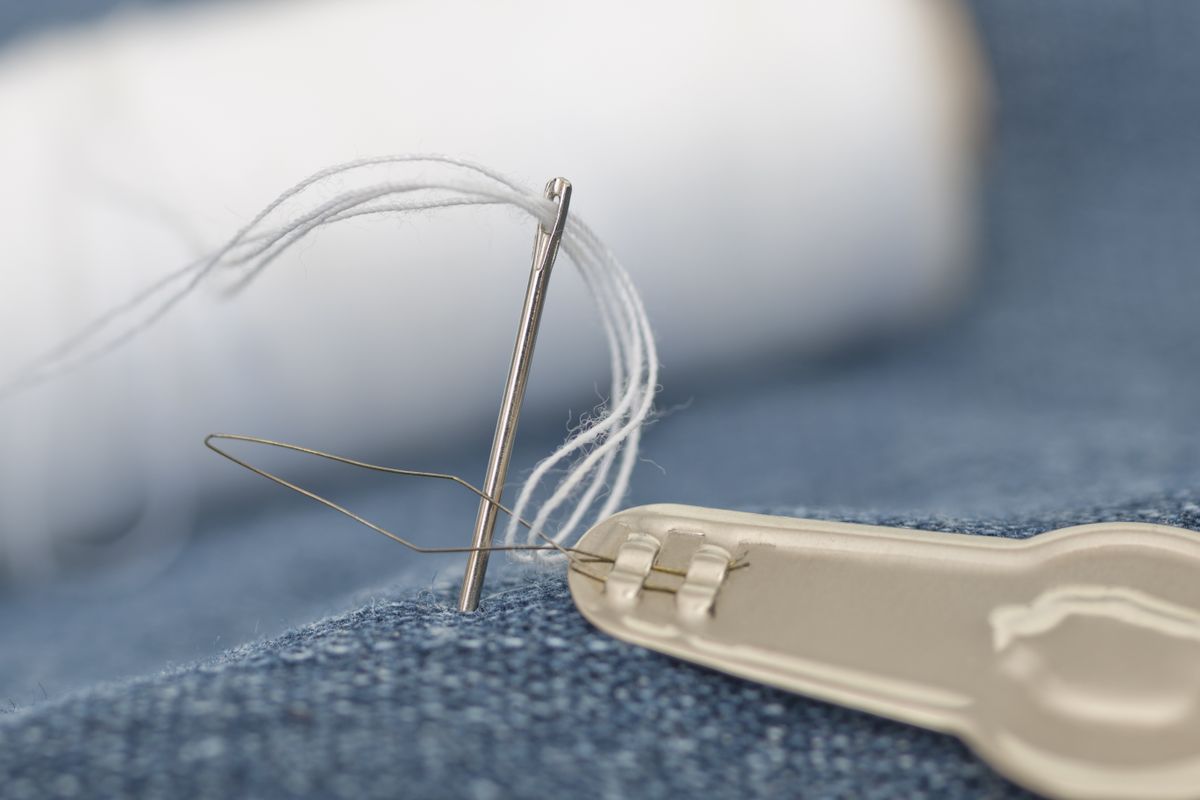
Put any spare button or matching thread in a small labelled envelope with the garment, rather than loose in a pocket. Keep needles and pins safely in a proper container. The aim is to make the next session easier, not to create a hidden sharp object for your future self.
Put a date against the useful repairs
Choose the repair that will return a regularly worn item to use. Schedule a short session or arrange an assessment with a professional. Ask about the likely result and cost before agreeing to more involved work; a repair can be worthwhile without making the garment look new.
After one item is finished, return it to the wardrobe instead of leaving it beside unfinished pieces. If an alteration would not solve the reason you avoid wearing something, stop treating it as an urgent project. A skirt with a loose hem may also be uncomfortable at the waist.
Keep the remaining list short enough to recognise at a glance. Revisit long-standing items honestly and choose an appropriate reuse or disposal route where repair is no longer realistic. The best repair system ends with clothes being worn again.