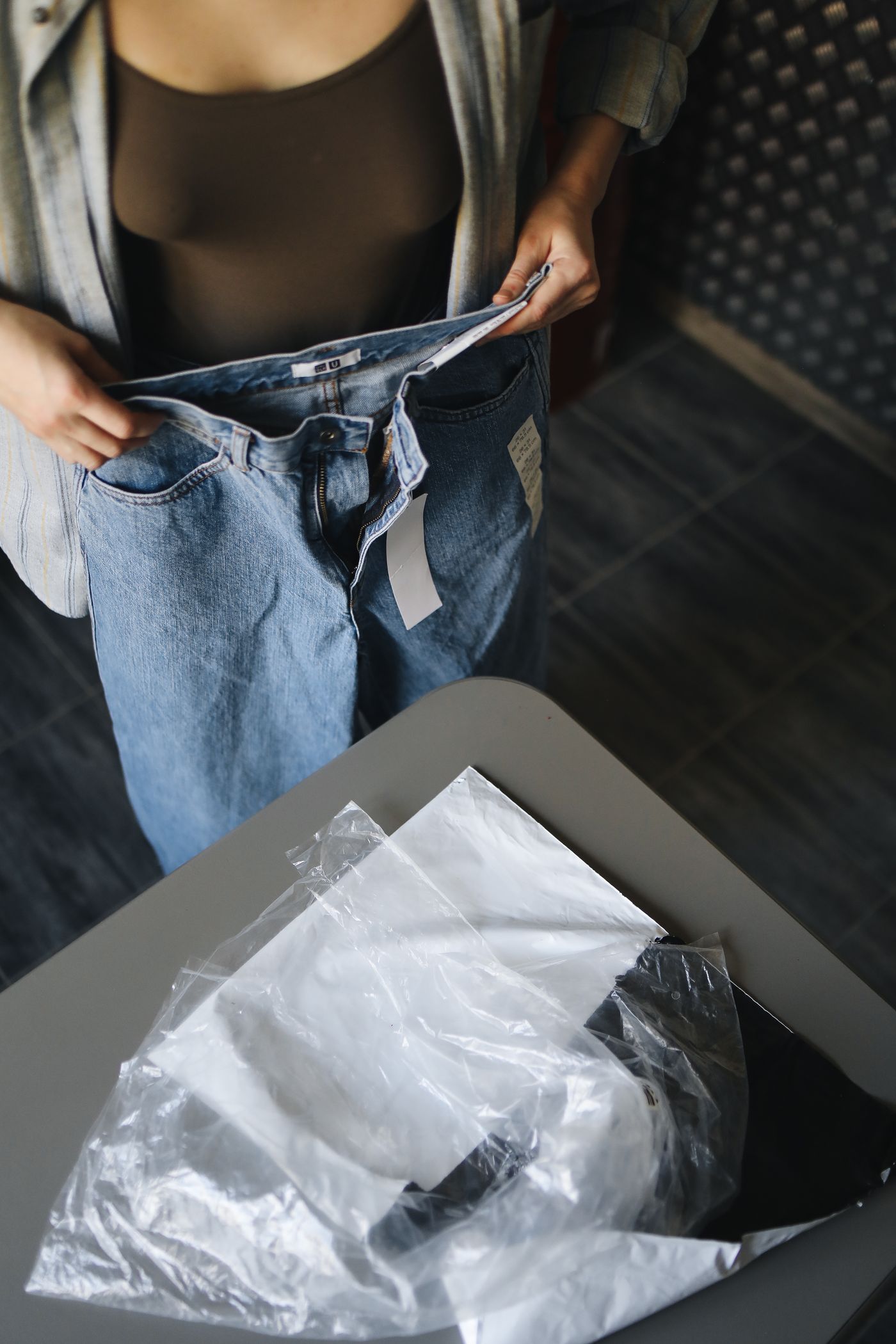
Check access and depth
Put your hand into the pocket and see whether the angle feels natural. Check that the lining is intact and that your fingers do not catch on a seam. A narrow decorative opening may not offer the same function as the substantial pocket you expected.
If you usually carry a phone or keys, test a similar light load with care. Notice whether the item fits securely or sits close to the edge. Avoid overloading a shop garment; you are assessing everyday usefulness, not its maximum capacity.
Watch the shape while moving
Sit, walk and bend gently. A pocket that looks flat when empty may gape or pull once occupied. On trousers, check whether its contents make the waistband or front feel uncomfortable. On a jacket, see whether one side drops noticeably under the load.
Consider the purpose. A dress pocket may be convenient for a tissue without being designed to replace a handbag. You do not need every garment to carry everything, but it helps to know its limits before relying on it for a full day out.
Do not cut before checking
Some tailored garments have pockets held closed by temporary basting, while other openings are decorative or constructed differently. Establish which you are looking at before removing any thread. Ask the retailer if the intention is unclear.
For second-hand clothing, inspect the pocket bags as carefully as the outer fabric. A small hole can lose a key even when the outside looks excellent. If a repair is needed, consider access and lining construction. Useful pockets should make wearing the garment easier, not add a repeated worry about where your belongings have gone.