Choose a simple starting point
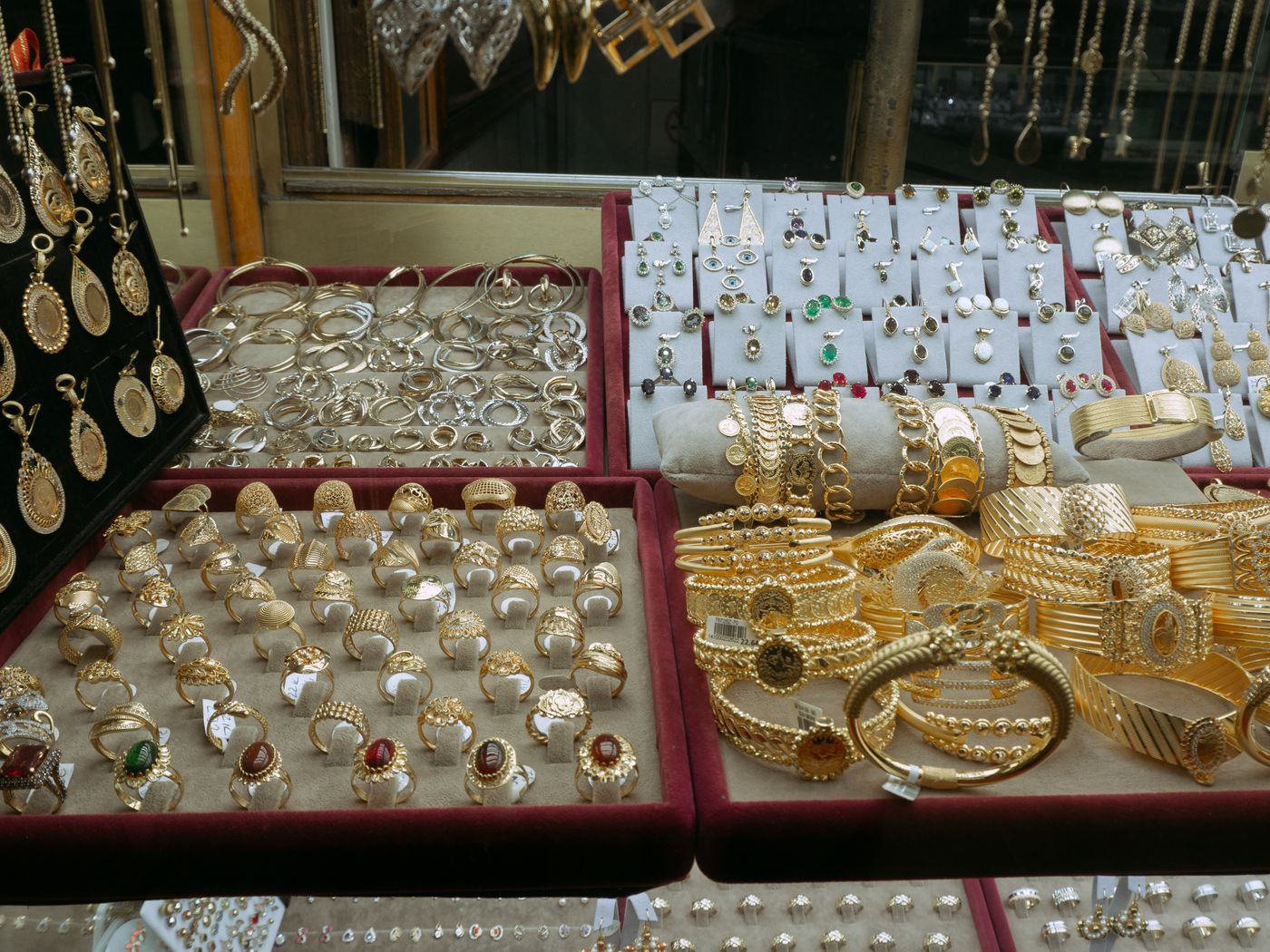
Try one ring or bracelet in each finish before layering several necklaces. Seeing two pieces together makes it easier to judge whether you like the contrast. Their proportions may matter more than the exact shade of metal.
A piece that already contains both colours can connect the combination, but buying one is not necessary. A watch, a favourite ring and small earrings can coexist without every finish matching.
Repeat a shape rather than a colour
Two rounded pieces or two fine chains can feel related even when their finishes differ. Alternatively, a substantial ring can be the main detail while the rest remains small. Decide where you want the attention to settle instead of trying to give every piece equal weight.
Try the jewellery against the outfit rather than on a bare surface alone. A patterned sleeve or busy neckline changes how much detail feels comfortable. If the result is too crowded, remove one piece and compare.
Think about contact and care
Different pieces can rub against one another, particularly stacked rings and bracelets. Consider scratches, delicate coatings and loose settings before wearing them together for a whole day. A visual match does not mean the materials share the same cleaning method.
Follow the maker’s care guidance for each item, especially where plating, stones or pearls are involved. Store chains so they do not knot together. The aim of mixing finishes is to use the jewellery you enjoy, not to make its care more complicated or damage a piece you value.