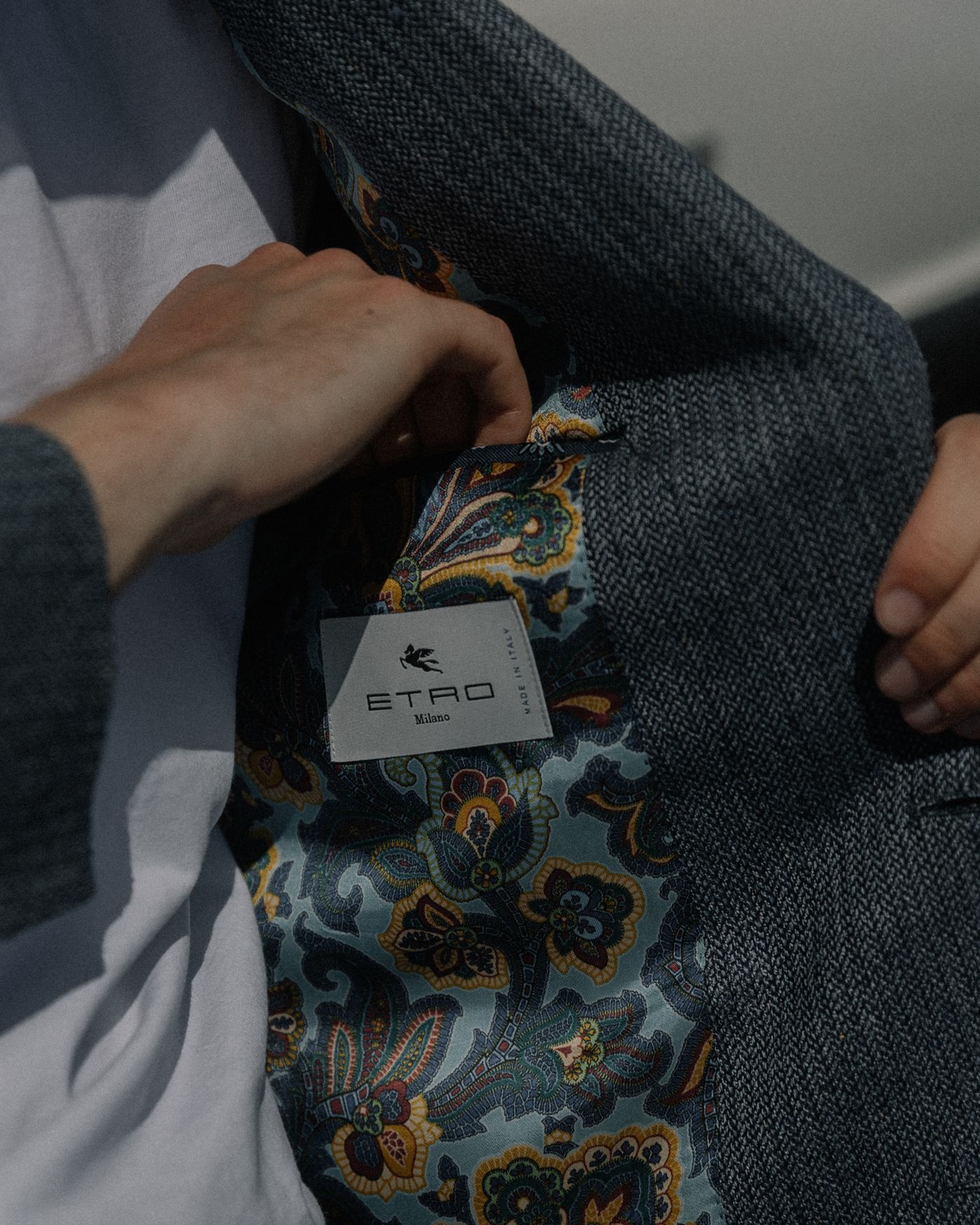
Follow the lining through the garment
Look at the body, sleeves and pockets rather than checking one easy-to-reach seam. Notice any pulling, loose stitching or areas where the lining appears caught. A lining should work with the garment's movement rather than hold one section awkwardly in place.
Try the piece over your intended layers. A jacket sleeve that slides comfortably over a shirt may behave differently over a textured knit. Check whether the combination feels easy to put on and remove without dragging the inner layer around.
Move and sit
Fasten the garment and reach forward, then sit if appropriate. Notice tension across the back or around the hips. The outside may appear roomy while the lining limits movement, so assess both together.
Check that the lining does not hang visibly below the outer hem unless that is part of the design. A little movement can be normal, but a persistent uneven edge deserves a closer look. Avoid pulling on it to force it into position in the fitting room.
Read materials and care together
The lining may differ from the main fabric, which is one reason fibre content alone cannot determine cleaning. Read the full care label and consider whether the treatment suits your routine. A garment you cannot conveniently maintain may be a less useful purchase despite a pleasing first impression.
An unlined garment is not automatically inferior. Summer tailoring and softly constructed pieces may be intentionally unlined or partly lined. Judge whether the inside is finished appropriately and feels comfortable for its intended use. If buying second-hand, look particularly closely at underarms, sleeve ends and the lining beside fastenings, where damage can be easy to overlook.