Start with a gentle fold
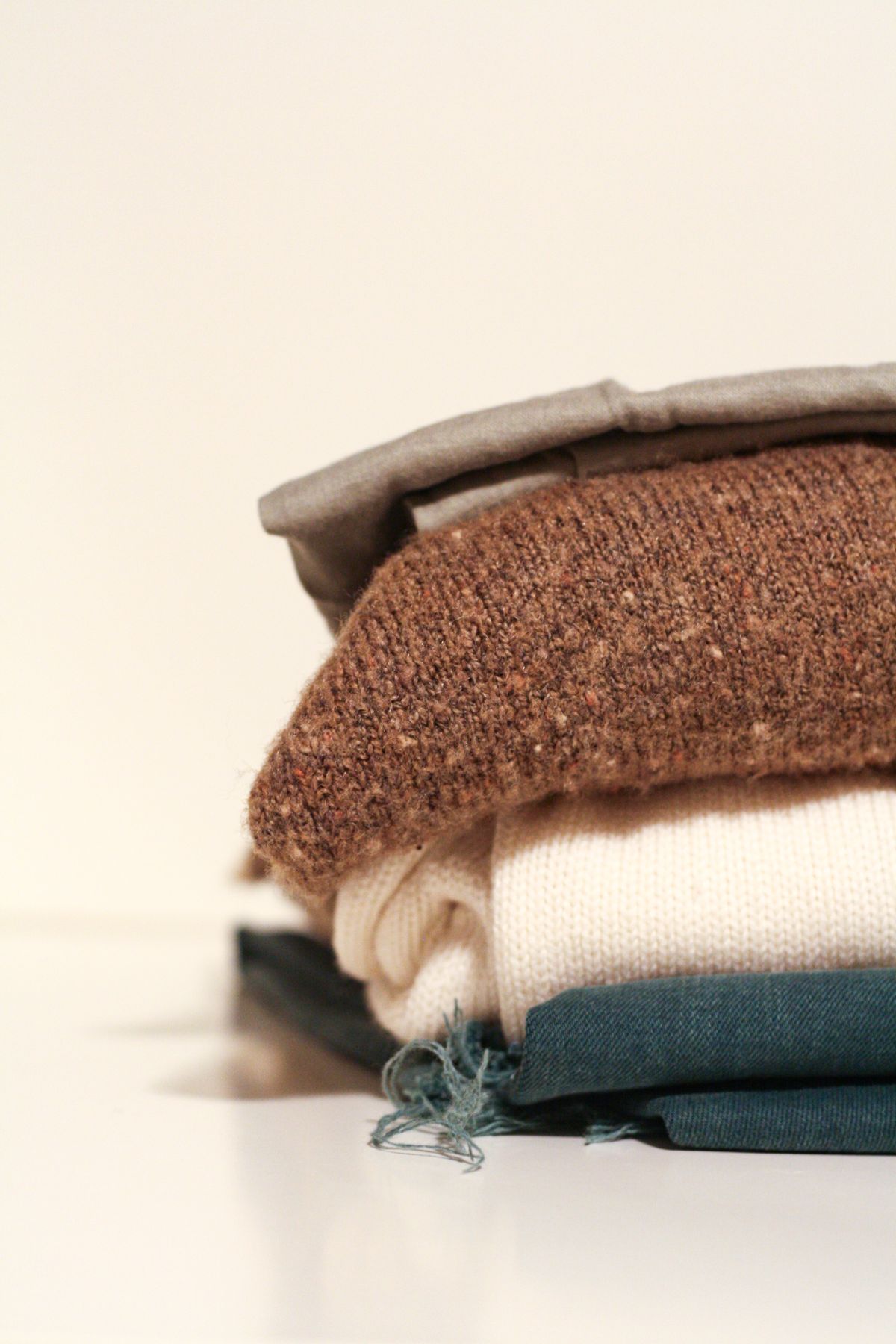
Lay a dry jumper on a clean surface, smooth it lightly and fold the sleeves inward without stretching them. Choose a final width that suits your shelf or drawer. There is no benefit in a precise fold that squeezes a thick cable knit into a space intended for thin tops.
Keep embellished areas from pressing hard against another garment. Check for loose jewellery, buttons or other objects in the storage space that might snag a knit when you pull it out. A small rough edge can cause more trouble than a slightly uneven stack.
Give each stack a job
Separate heavy jumpers from lighter layers so one pile does not become lopsided. A low everyday stack at a comfortable height is easier to use than an impressive display on a high shelf. Put the piece you wear most where you can take it out with one hand.
In a drawer, try loose rows that show a portion of each garment. If the knit collapses or catches when the drawer shuts, return to flatter stacks. The fabric should fit the storage, not be compressed until the arrangement looks tidy.
Check before longer storage
Clean according to the care label and make sure the whole garment is dry before putting it away for a season. Choose a cool, dry place away from direct sunlight. Inspect stored knitwear periodically rather than assuming a closed container needs no attention.
Use the available space as a limit
If every stack topples when you remove a jumper, make fewer, lower groups or move inactive pieces elsewhere. Keep a little space for returning laundry. A wardrobe arrangement is successful when it remains workable after use, not only immediately after you have folded everything.