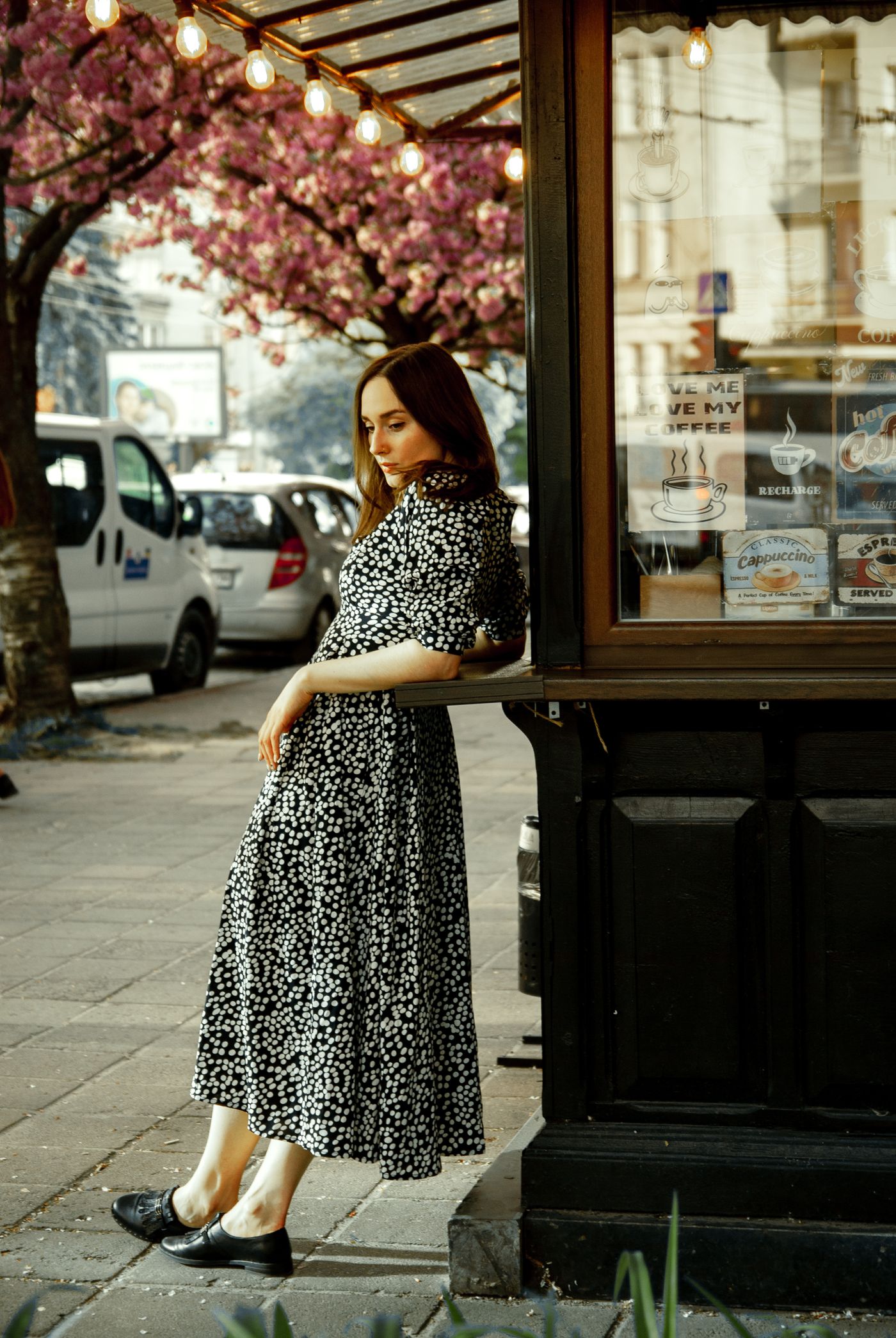
Try the movements you usually make
Walk a few steps, sit down and stand again. If possible, test a small step or mimic getting into a chair without pulling the hem into place. Check whether you keep adjusting the skirt or whether it stays comfortable without attention.
A dress that feels fine standing may sit much higher when seated. Another may be long enough to catch under a shoe on stairs. Neither observation makes the style wrong; it helps you decide whether it suits the situations in which you plan to wear it.
Bring the footwear into the decision
Try the dress with shoes of the intended height and shape. A wide skirt can move differently around a chunky boot than a slim flat, while a long hem may need particular care around the heel. Look at the full outfit rather than treating length as an isolated number.
Consider your outer layer too. A coat or cardigan ending near the dress hem can change the appearance, although there is no universal rule about which must be longer. Use the combination you enjoy and can move in comfortably.
Ask before shortening
A plain straight hem may allow a relatively simple alteration, but borders, pleats, curved shaping and lining can complicate the work. Ask how shortening would affect the design and what it would cost before committing.
Think about laundering as well: check the care instructions rather than assuming the dress will always retain exactly the same dimensions regardless of treatment. Choose a length with your real activities in mind. If you spend the try-on planning how to avoid bending, sitting or walking normally, another dress may be the more useful choice.