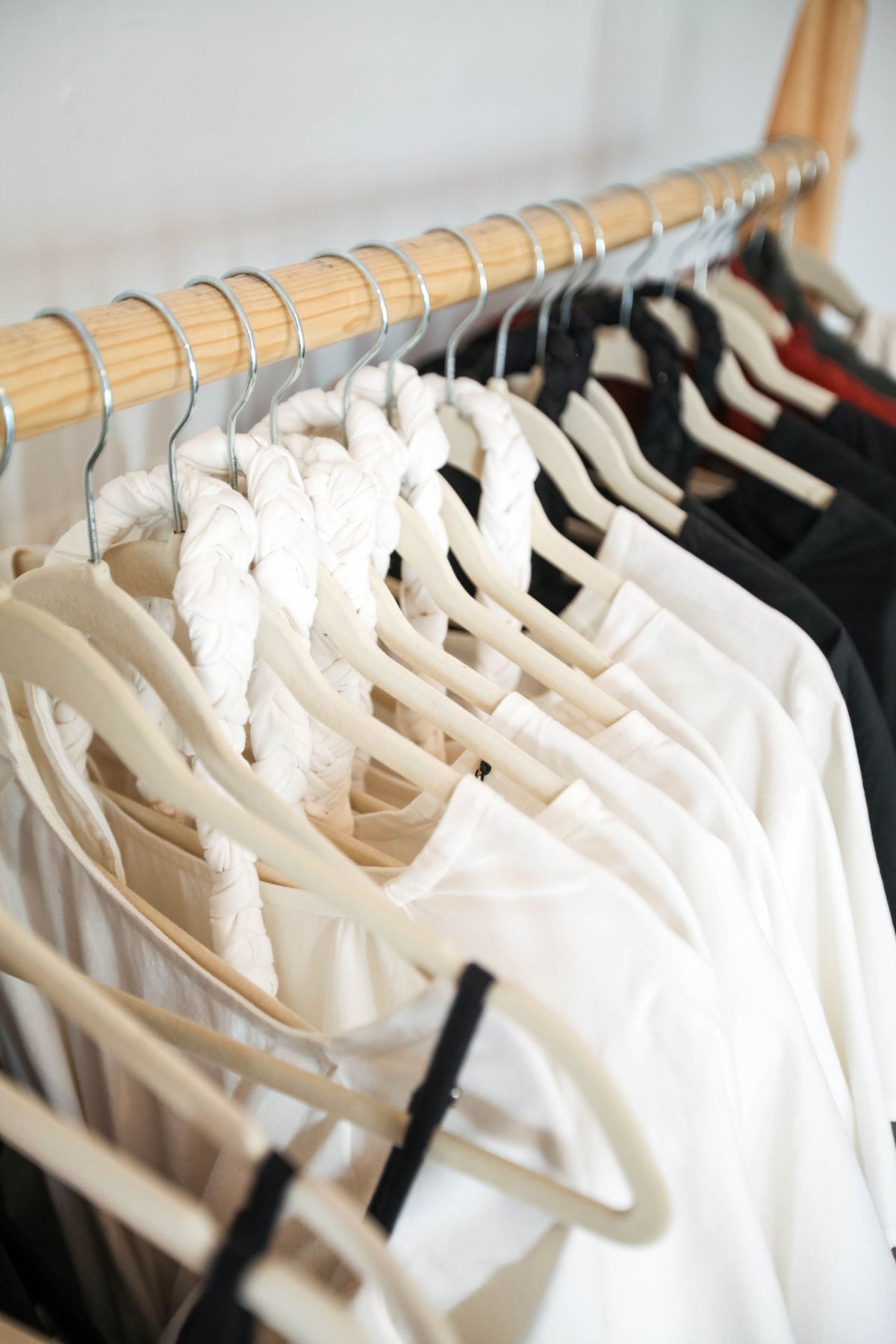
Start with your actual week
Think about the places, temperatures and activities your clothes must cover. Someone walking to work, attending occasional meetings and spending weekends outdoors needs different combinations from someone mostly working at home. Begin with those repeated situations instead of an idealised list of essentials.
Pull out the garments you already wear comfortably. Try complete combinations, including shoes and outer layers. Notice which pieces connect several outfits and which need very particular companions. A favourite patterned skirt can belong in a capsule just as easily as plain trousers if you regularly wear it.
Let compatibility do the work
Choose a few colours you enjoy together, but do not require every garment to match every other garment. It is enough for each main piece to have useful partners. Texture, sleeve volume and hem length can matter as much as colour when layers are involved.
Keep laundry in the calculation. If you wash weekly, a tiny collection that only works when every top is clean may be inconvenient. Include the underwear, socks and practical layers that make the visible outfits wearable, even if you do not count them as part of the exercise.
Try it without discarding the rest
Move your chosen group to the easiest section of the wardrobe and use it for a short period. Keep other clothes available rather than donating them to satisfy a number. You can learn whether the selection works without making the experiment irreversible.
After several ordinary days, add what was repeatedly missing and remove what stayed unused for a clear reason. The aim is less decision-making and more wear from useful clothes. If a rigid count makes mornings harder, change the count rather than forcing your life to fit the wardrobe.