Separate soft fabric from hardware
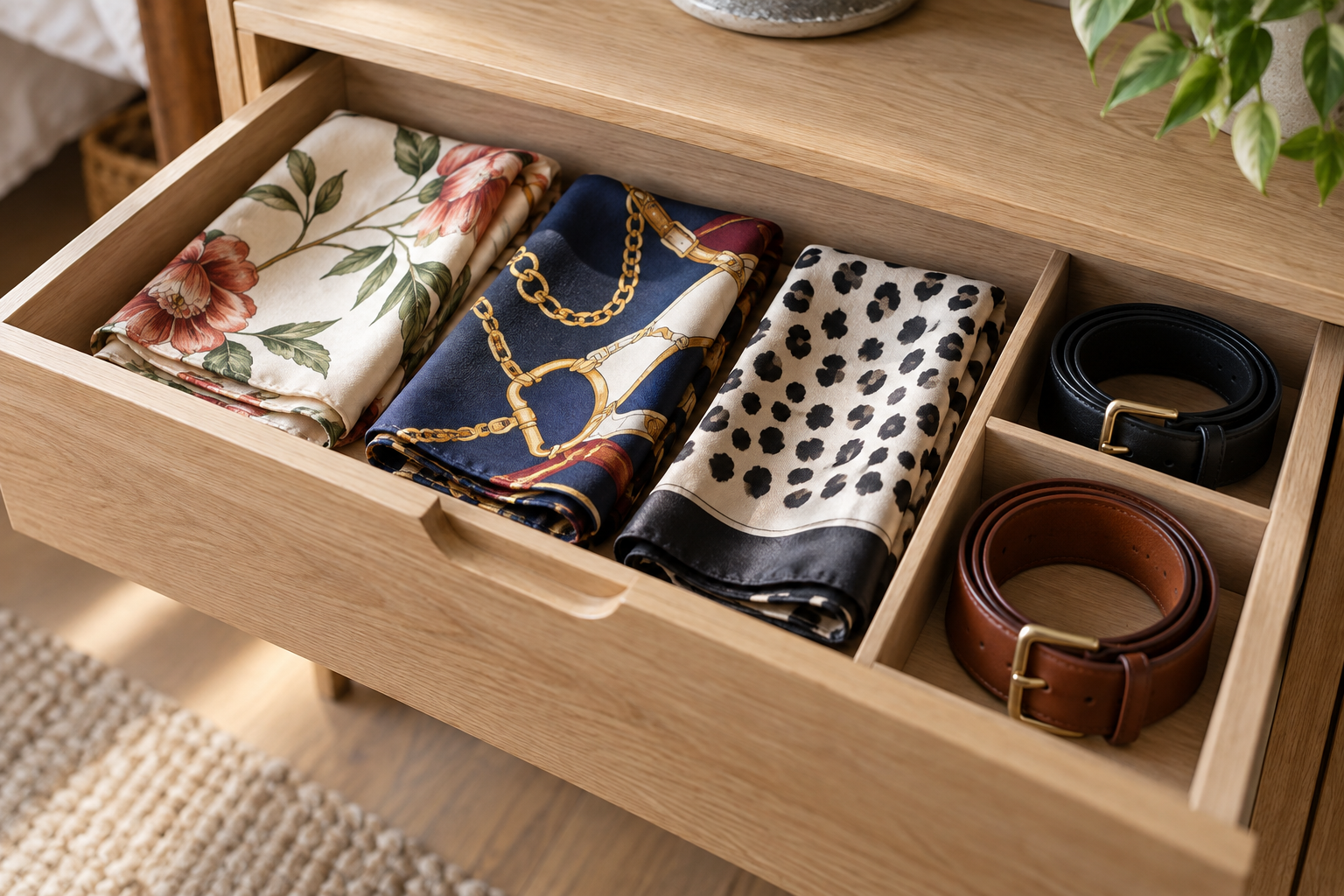
Metal buckles and rough belt edges can catch delicate scarves. Give them neighbouring but distinct spaces, using a shallow box or divider if needed. Lay scarves loosely folded so you can see a portion of the colour or pattern. Avoid forcing embellished or easily creased fabric into a very small compartment.
Keep belts in a shape that does not introduce a sharp kink. Depending on their construction, that may mean a loose roll or hanging from an appropriate support. Check the material's care guidance for anything unusual. A belt with a bulky buckle needs more room than a narrow fabric tie.
Before arranging them, remove broken pieces or anything waiting for repair. A missing buckle pin should not be rediscovered every time you dress. Keep detachable ties with the garment they belong to unless you regularly use them separately.
Make the selection easy to maintain
Place the accessories you use most near the front. Occasional silk scarves can live in a different section from daily cold-weather scarves, so you are not lifting one group to reach the other. Use existing containers to test the layout before purchasing an organiser.
If hanging scarves, choose a smooth support and avoid stretching a delicate fabric through a tight hole. Leave enough room to take one off without dragging down the rest. Hooks can suit some robust scarves, but a heavily loaded hook soon becomes another hidden pile.
Return an accessory after it has aired or dried as needed. Do not close damp fabric into a drawer. Every so often, unfold the less-used pieces and check their condition. The aim is a small, visible choice that helps an outfit, rather than a display so complicated that putting one scarf away feels like a task.