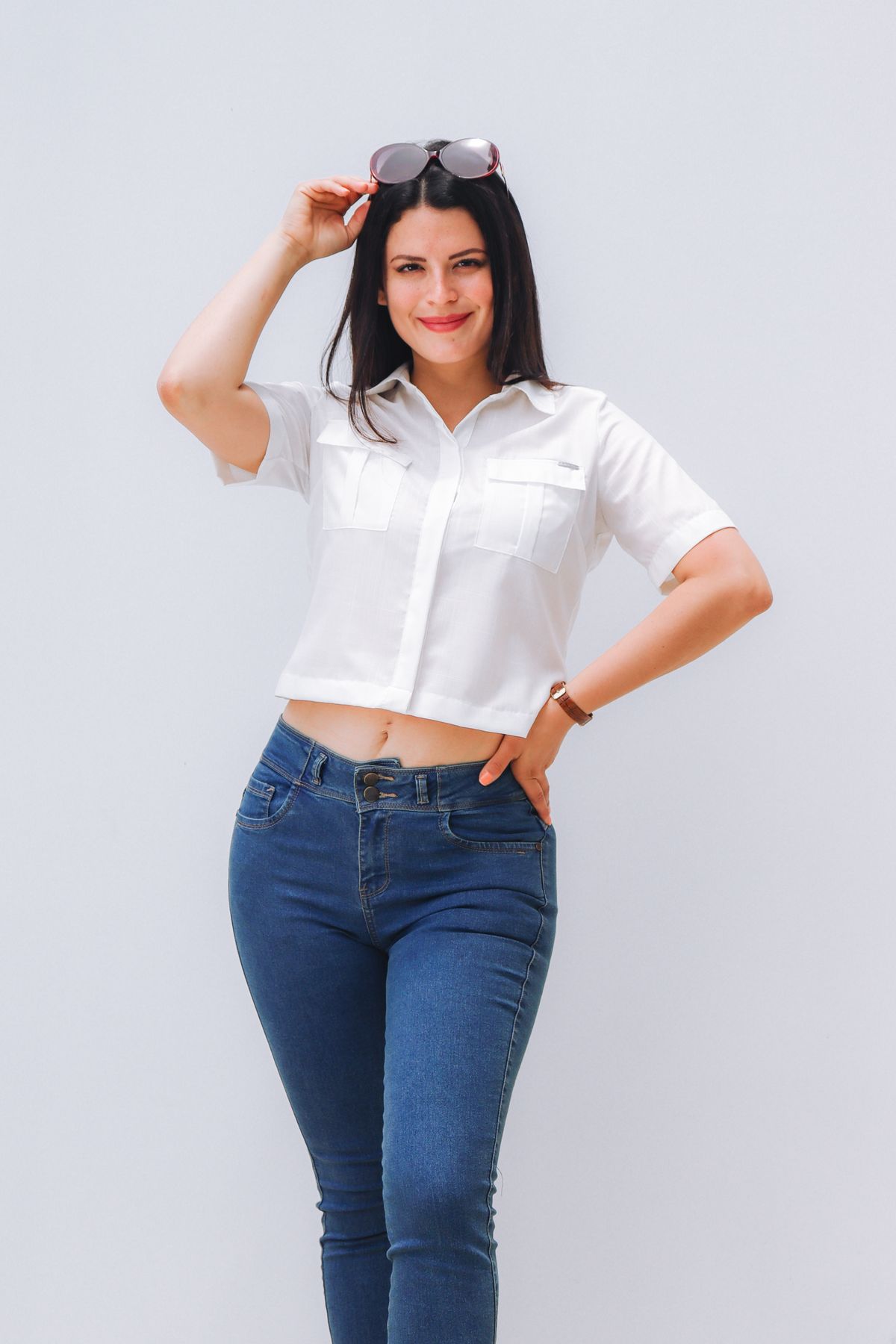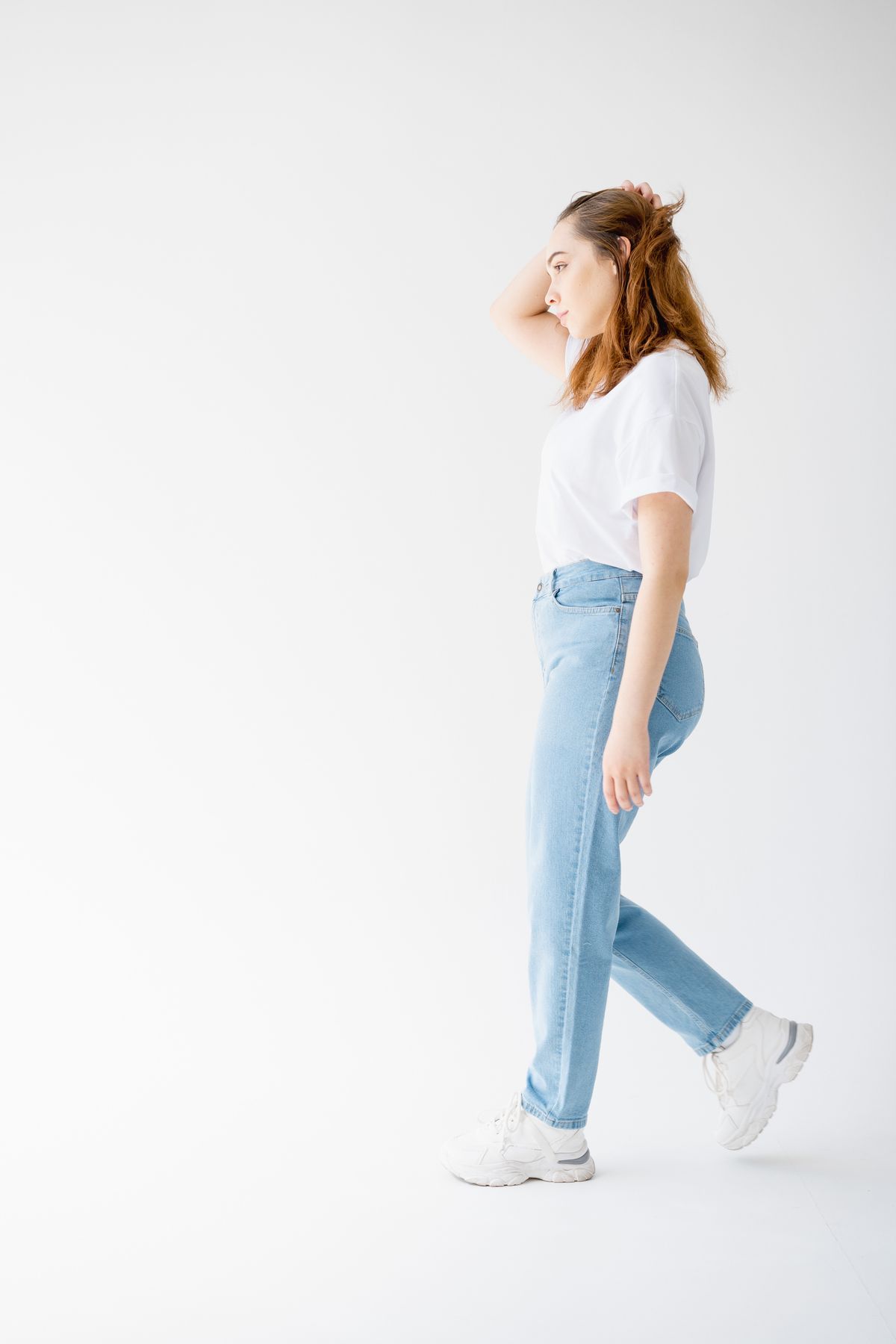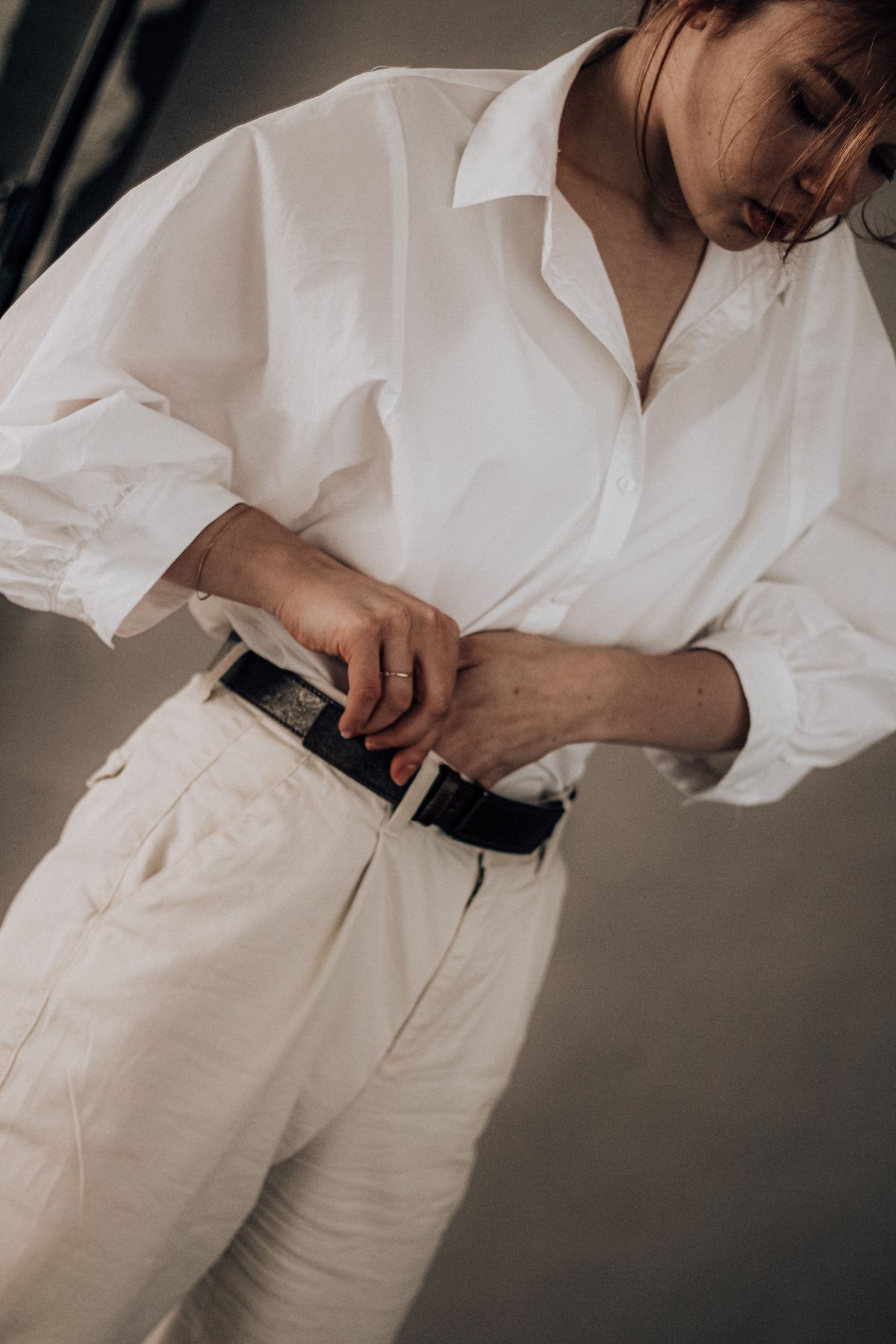
Notice the fabric at the waistband
Start with a full tuck, then sit down. A fine shirt may settle comfortably while a thick jumper creates pressure or a ridge. If the waistband becomes restrictive, leaving the top loose can be the better choice. A larger trouser size is not automatically the answer to excess fabric.
For a shirt, release a little fabric after tucking rather than pulling it tight across your back. Reach forward and check whether the collar and shoulders still feel comfortable.
Compare the untucked version
Let the top fall naturally and look at the side view. A curved shirt hem, a straight T-shirt and a ribbed jumper all finish differently. If the top covers a detail you like, such as pleats or a belt, a shorter top may be easier than managing a complicated partial tuck.
A small front tuck can work when the fabric is light enough. Check that the side seams are not twisting and that the back hangs as you expect. If it comes undone every time you move, it may not be useful for that day.
Include the layer worn on top
An open jacket creates its own vertical lines, so you may prefer the top untucked beneath it. With a cardigan fastened, the tuck might barely be visible. Judge the complete outfit rather than one isolated piece.
The practical test is simple: can you sit, walk and lift your arms without rearranging everything? Keep the version that lets you get on with your plans. Different tops can have different answers even with the same pair of trousers.