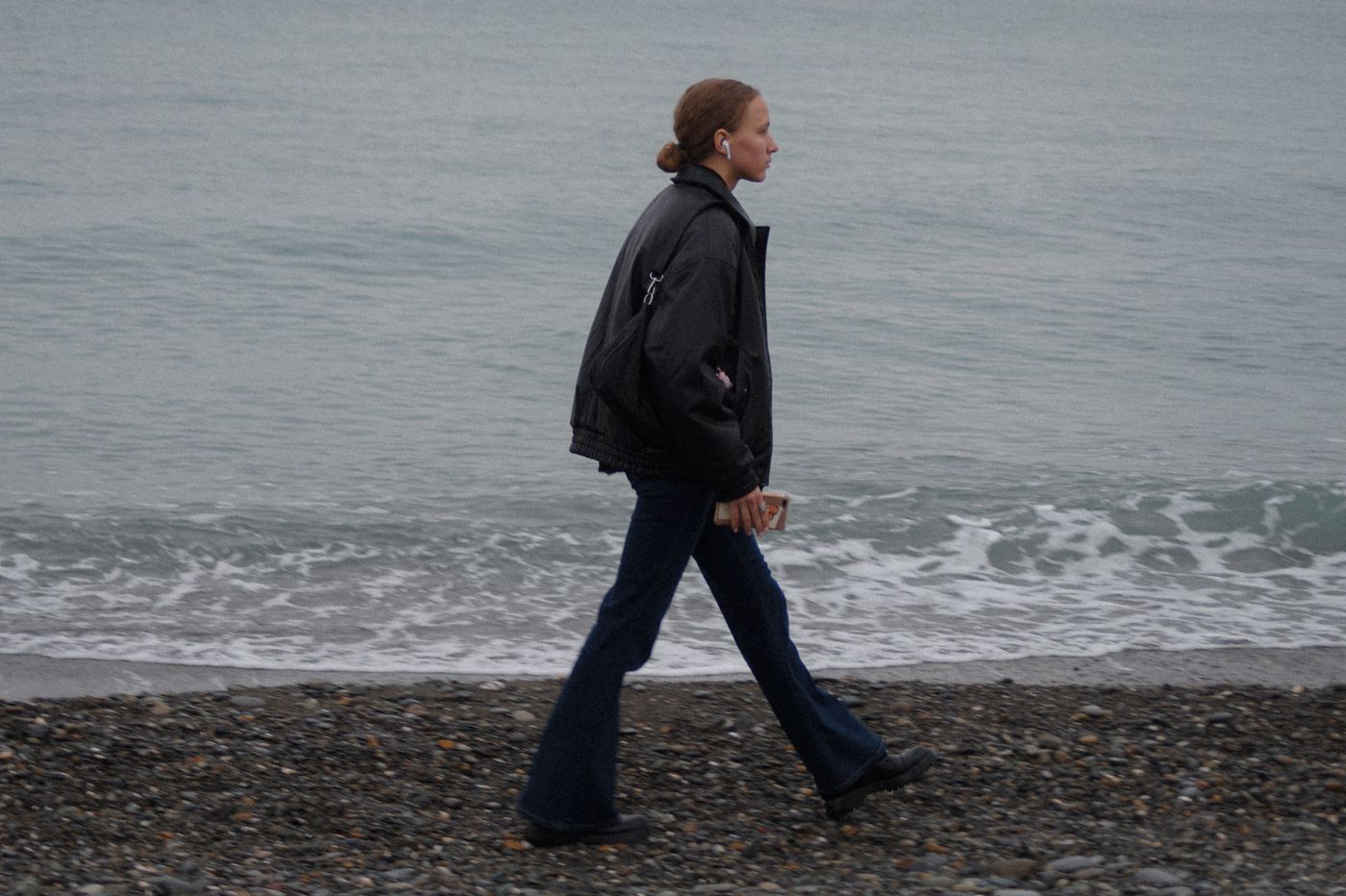
Start with the planned walk
Decide whether you will mostly be on a promenade, sand or a stony path. Footwear that works for one surface may be awkward on another. Use shoes you know, and consider how easy they are to empty or clean if sand gets inside. Long hems are worth checking before you head towards wet ground.
For a straightforward day, try trousers that clear the floor, a light top and a removable knit. A dress or skirt can work too; walk around in it outdoors first if you are unsure how the fabric behaves in a breeze. You should be able to move without needing to hold the outfit in place all afternoon.
Add an outer layer with a job
Check the forecast near the time you leave. A lightweight jacket may be useful for wind, while predicted rain needs a layer suited to that weather. Do not assume every coat provides the same protection. Use the manufacturer's description and the garment's condition when judging what it can handle.
Make sure the jacket fits over the knit you plan to bring. Try it fastened with your bag on, then check where both layers will go if you take them off. A packable combination can be easier to carry than one bulky jumper that dominates the bag.
Leave space for the small practical things
A separate pouch or bag can keep damp or sandy items away from clean clothes. If you plan to change shoes, account for their space before adding another spare outfit. Choose accessories that are secure enough for the conditions and easy to put away. A seaside outfit need not follow a nautical colour scheme; its useful feature is that it lets you enjoy the actual place and weather.