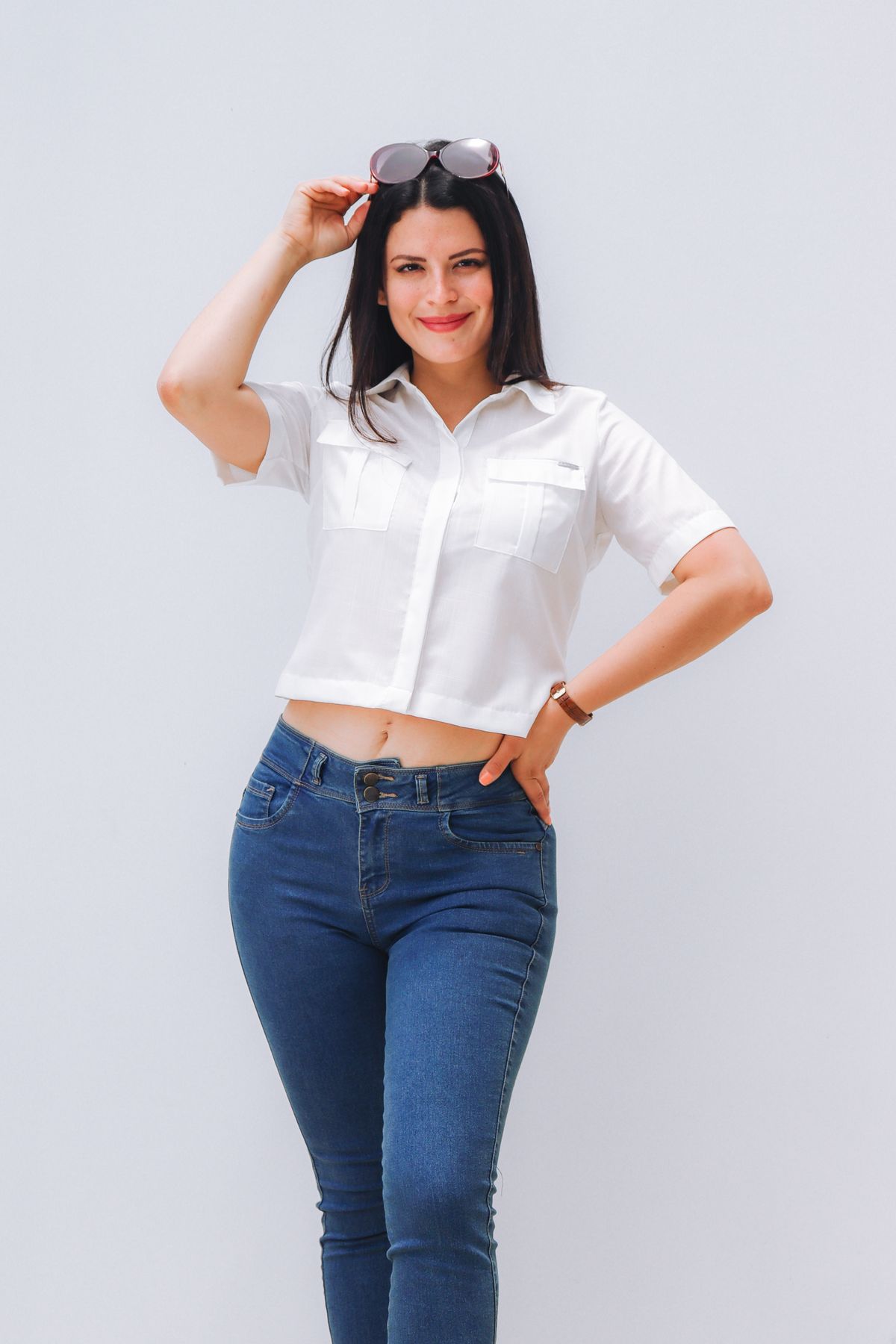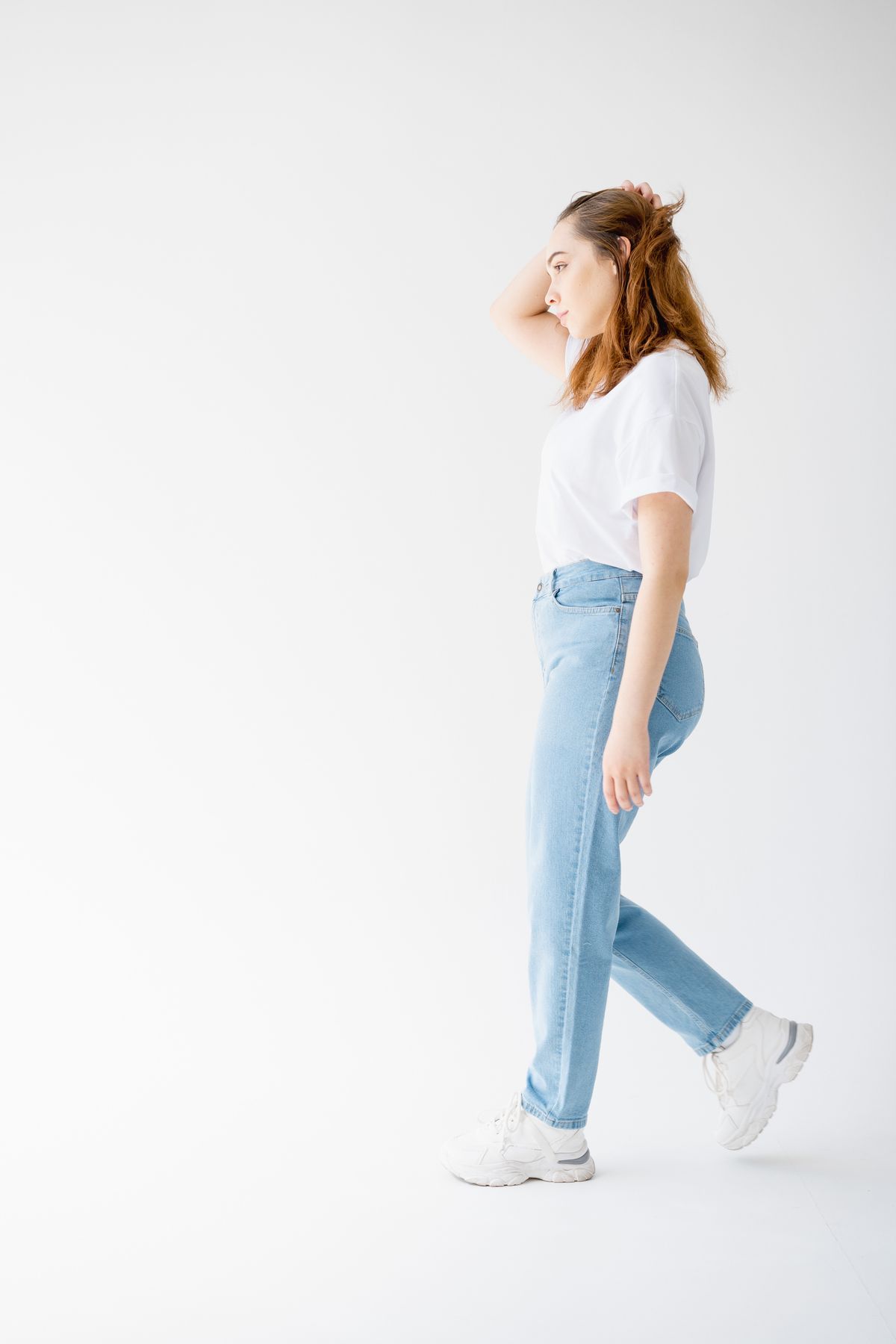
Find the meeting point
Try the jacket with the bottom half you wear most. Look at the gap or overlap between the jacket hem and the waistband. A small gap may be welcome in warm weather but inconvenient on a cold commute. Lift your arms to check how far the hem moves.
The label cropped covers many lengths. Do not assume that a jacket photographed at someone else’s waist will finish in the same place on you. Measurements and an actual try-on are more useful.
Watch the layer underneath
A longer shirt creates a visible line below a short jacket. That can be deliberate, but check whether the two hems fall neatly or catch on one another. A shorter top gives a simpler outline if you prefer less layering on show.
With a dress, fasten the jacket and see whether it compresses the fabric at the waist or ribs. A jacket that only works open may still be useful, provided that suits the weather and the way you intend to wear it.
Balance without a fixed formula
Wide trousers or a fuller skirt can sit comfortably below a shorter outer layer. Narrow trousers can work too. Compare how much structure the jacket brings before adding a belt, scarf or another detail.
Put your bag on your shoulder and test the pockets. Small jackets sometimes have pockets positioned too high or too shallow for what you carry. If it is mainly an indoor layer, that may not matter; if it replaces your coat, practical storage deserves a closer look.